Winter mountaineering course base & advance
---
Are you a good climber? But have you never climbed on ice?
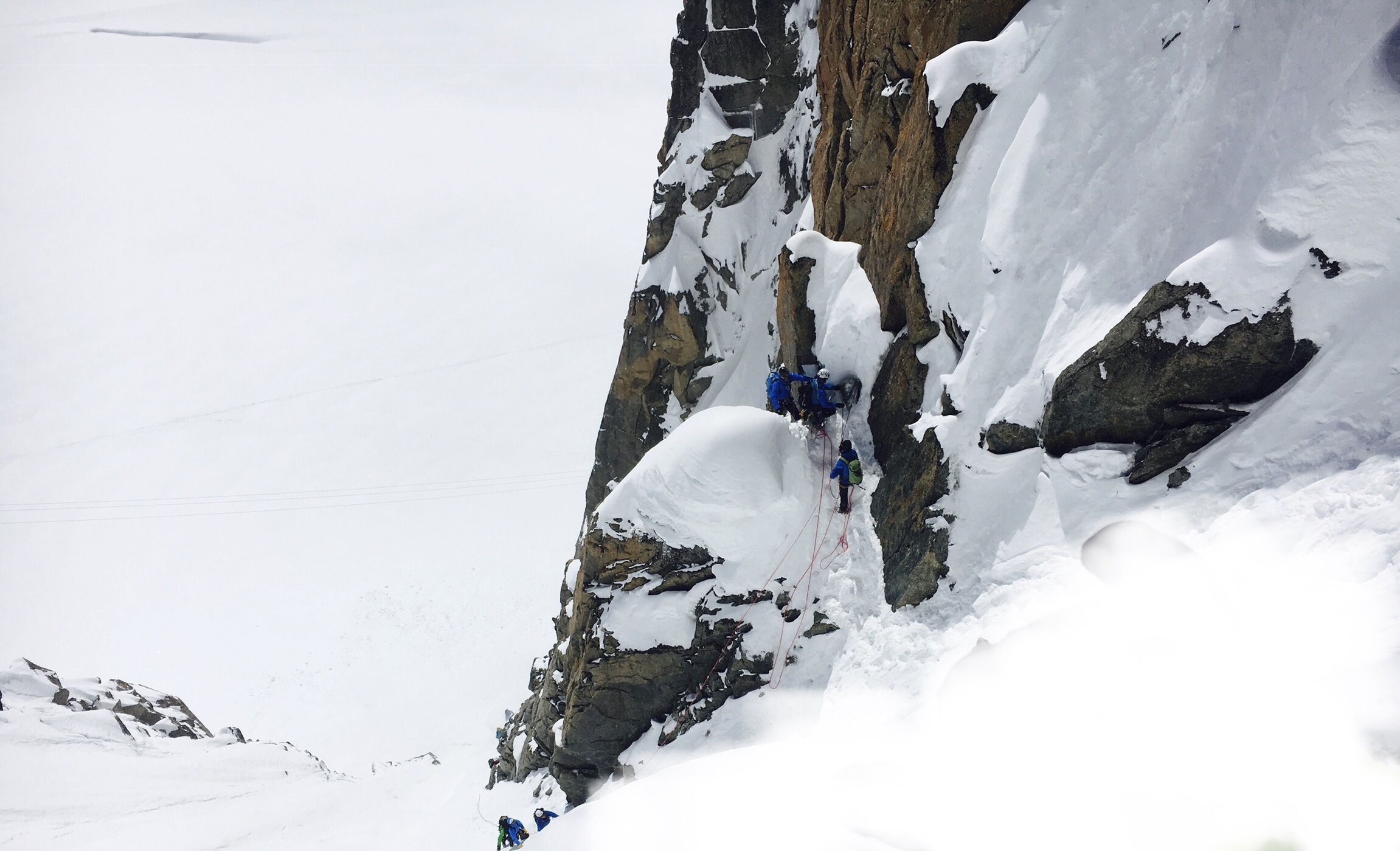
This 5-day course covers the fundamentals of winter mountaineering, bringing you closer to the mountains like never before through one of the most comprehensive activities in mountain environments. Taken to a high level, it forms the foundation for exploratory expeditions in wild areas.
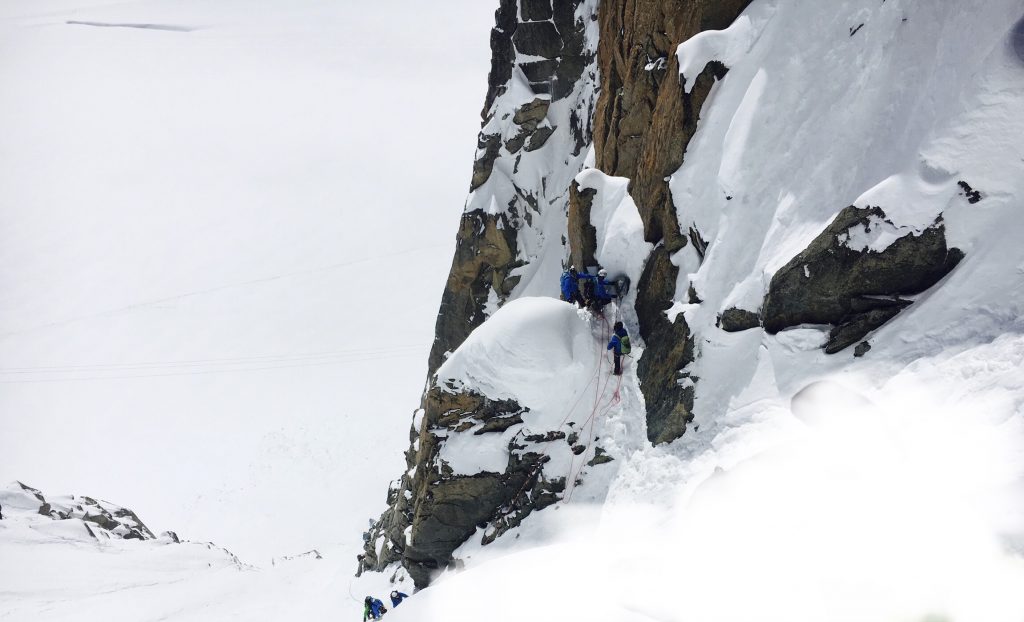
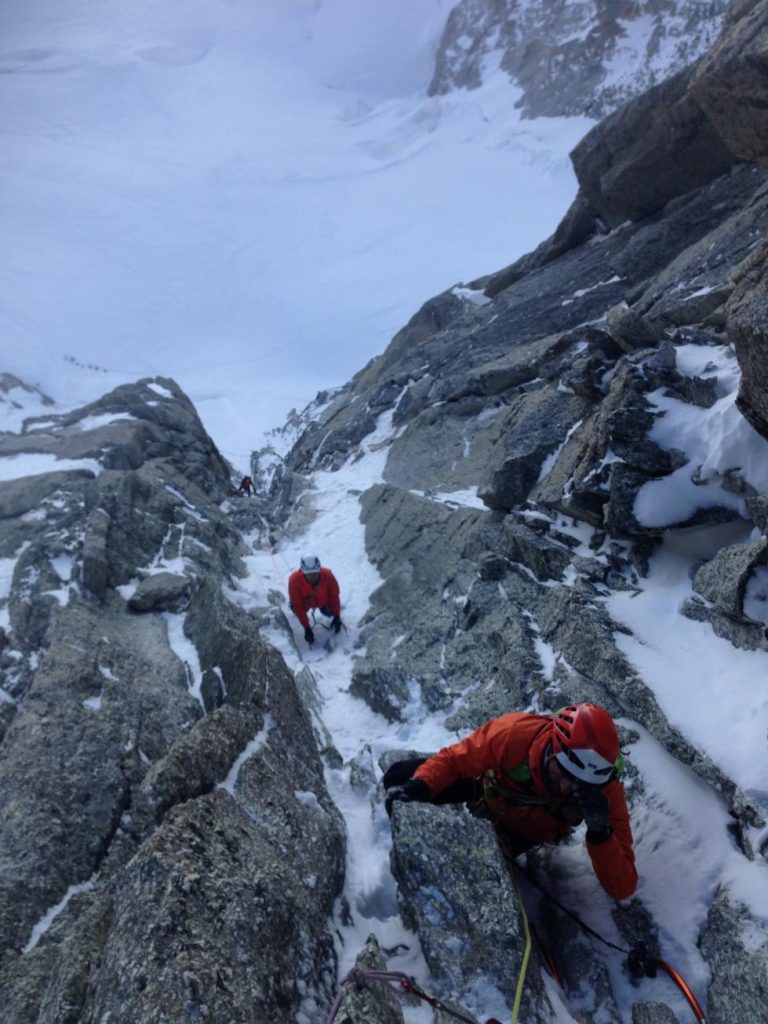
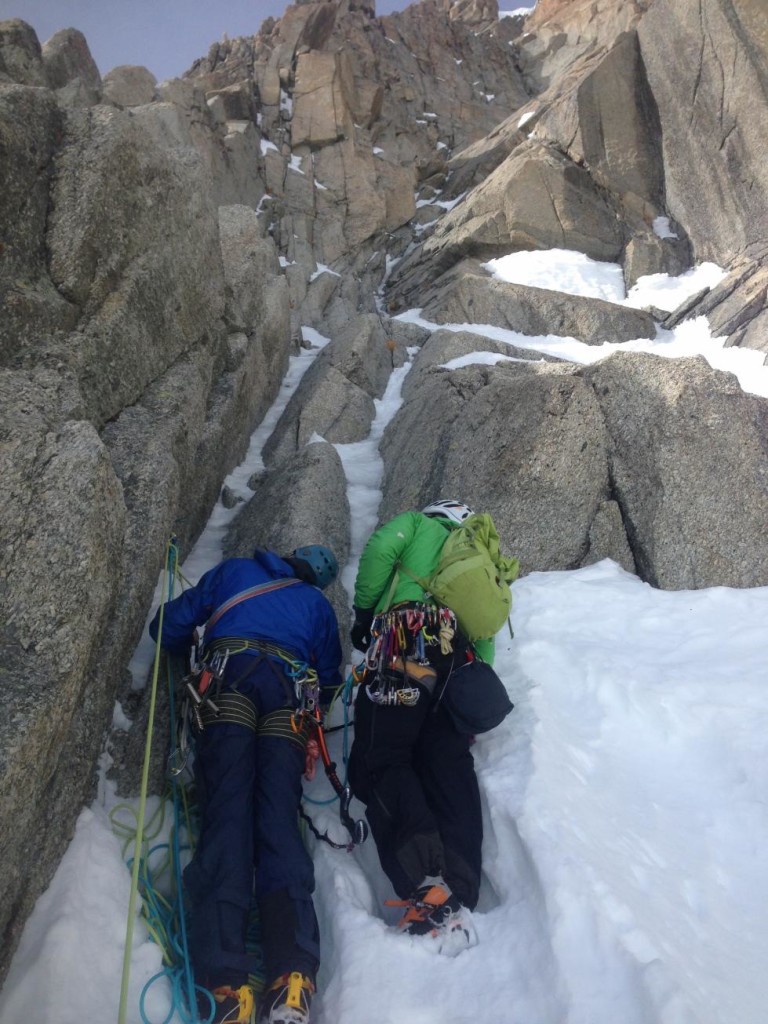
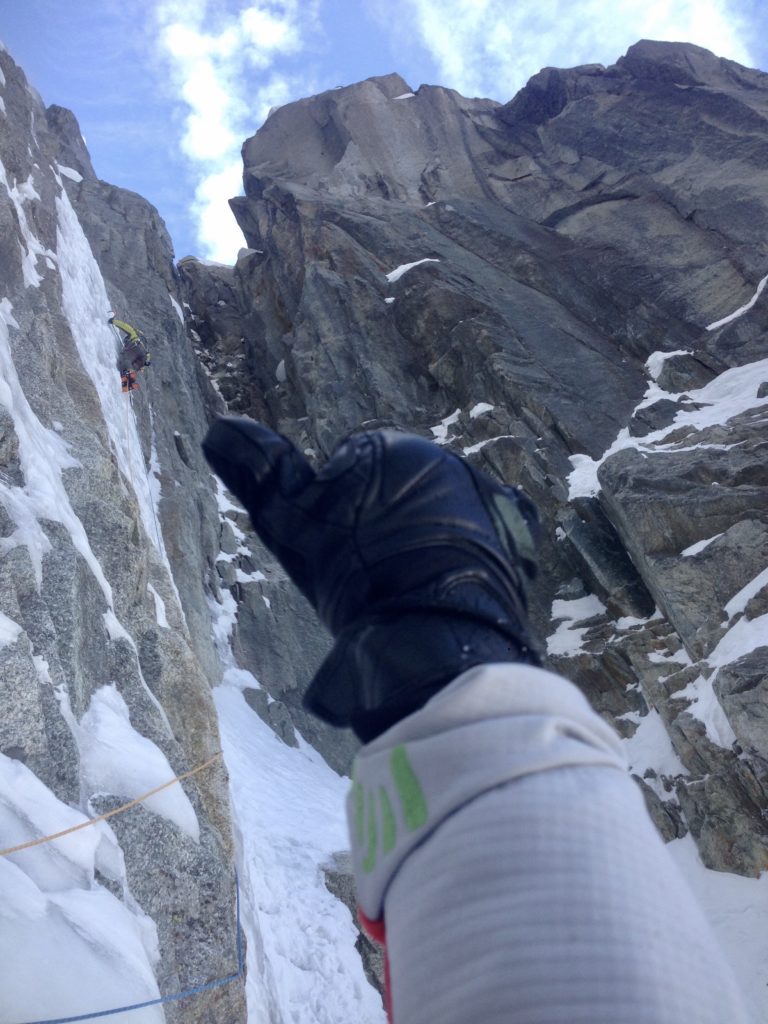
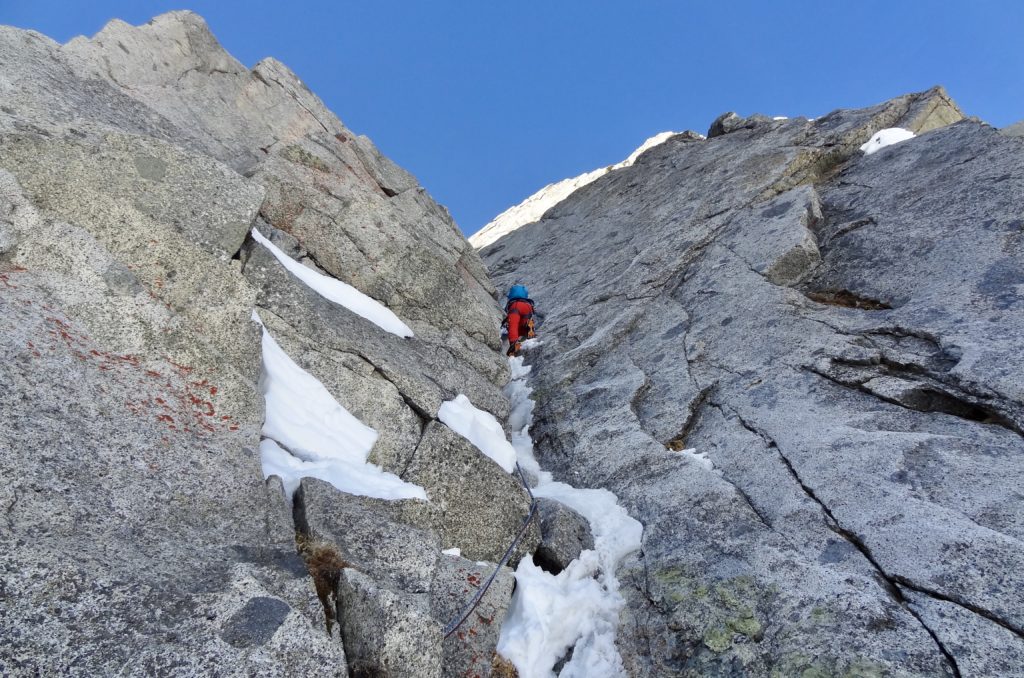
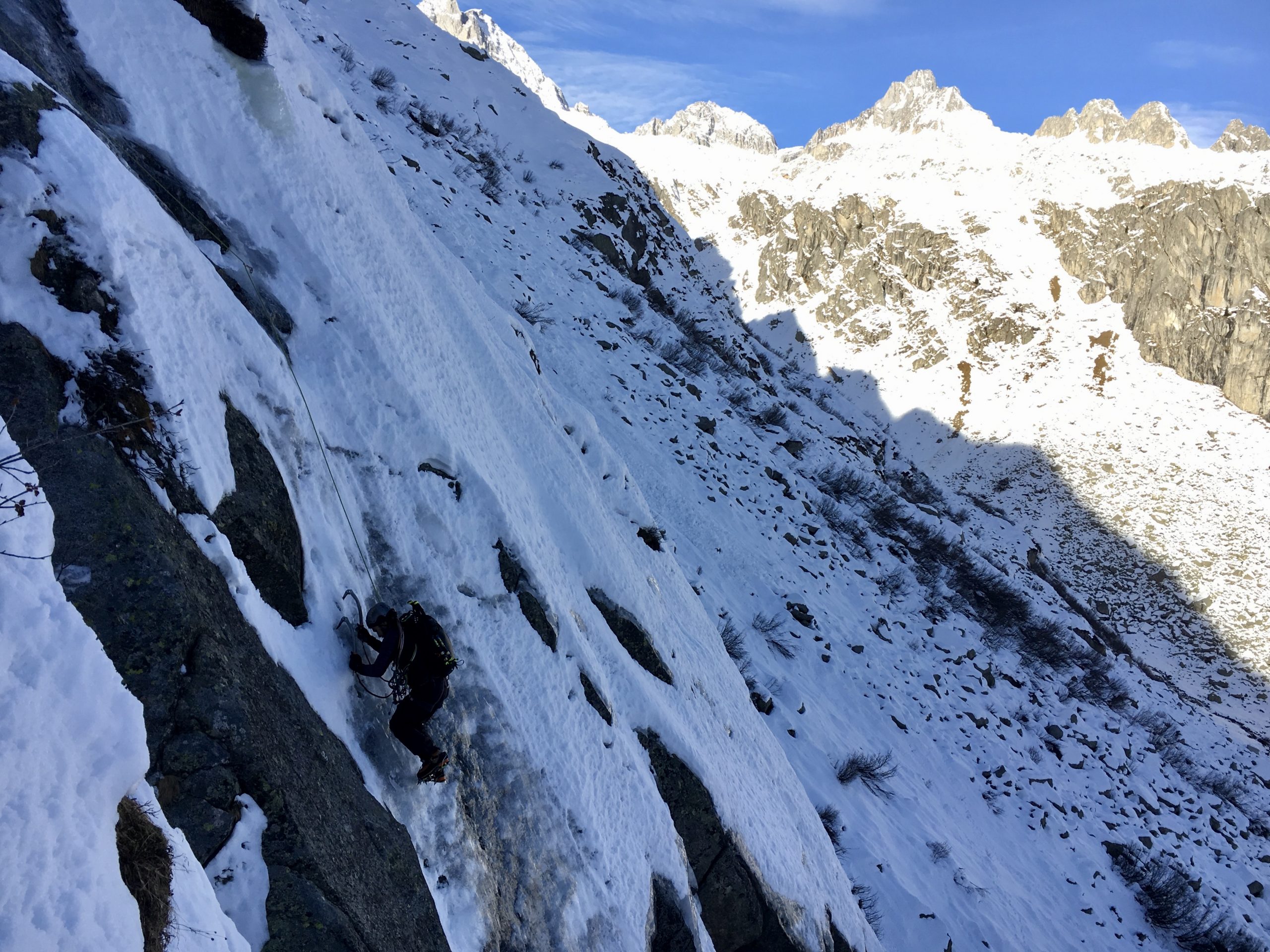
It's a great opportunity to experience the mountains in the mid-season and winter, through ice lines in dihedrals and cracks that are absent and unimaginable in milder seasons: our alpine guides will help you live this adventure!
The courses will begin with a general overview through PowerPoint presentations covering snow, avalanches, mountain hazards, and some basic meteorology and topography: these topics will be the focus of two dedicated evenings.
**Basic Level**
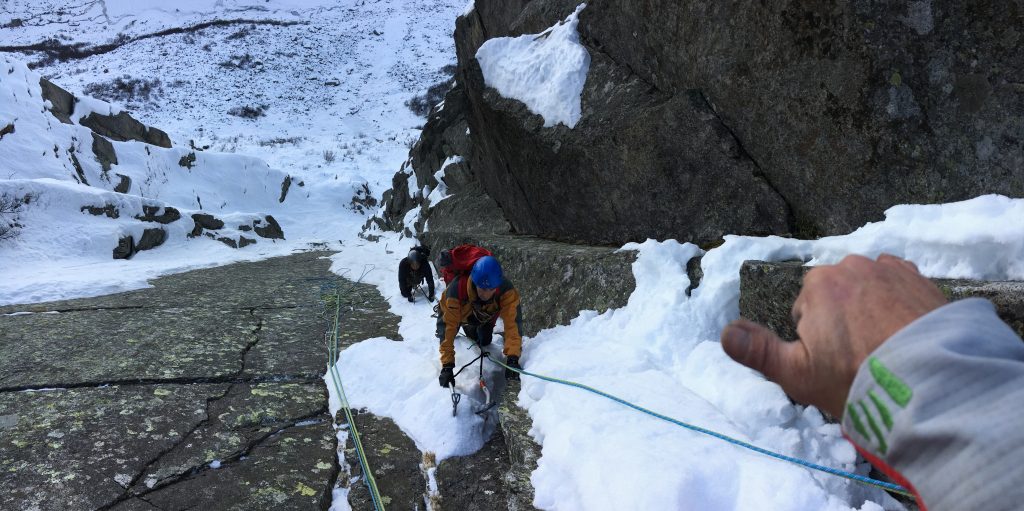
Day 1: Dry tooling or climbing with ice axes and crampons on rock walls only; belaying on rock, ice, and rappelling.
Day 2: High mountain ascent
Day 3: High mountain ascent
**Advanced Level**
Day 1: Dry tooling or climbing with ice axes and crampons on rock walls only; crevasse rescue maneuvers and some belaying on rock/ice and rappelling.
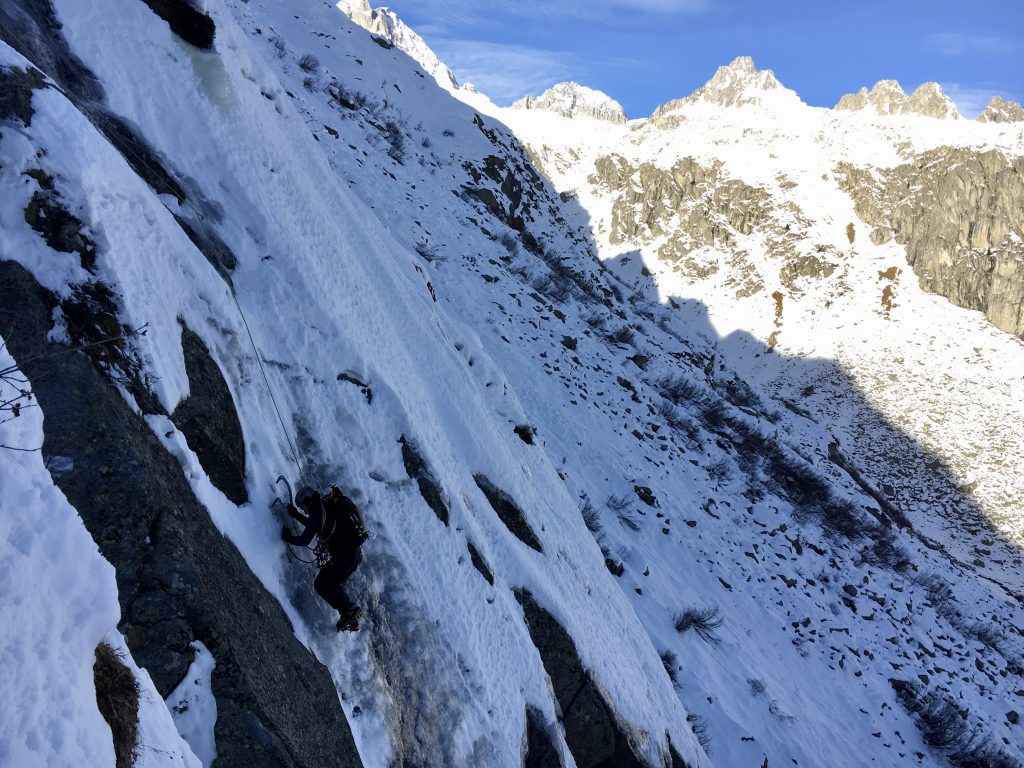
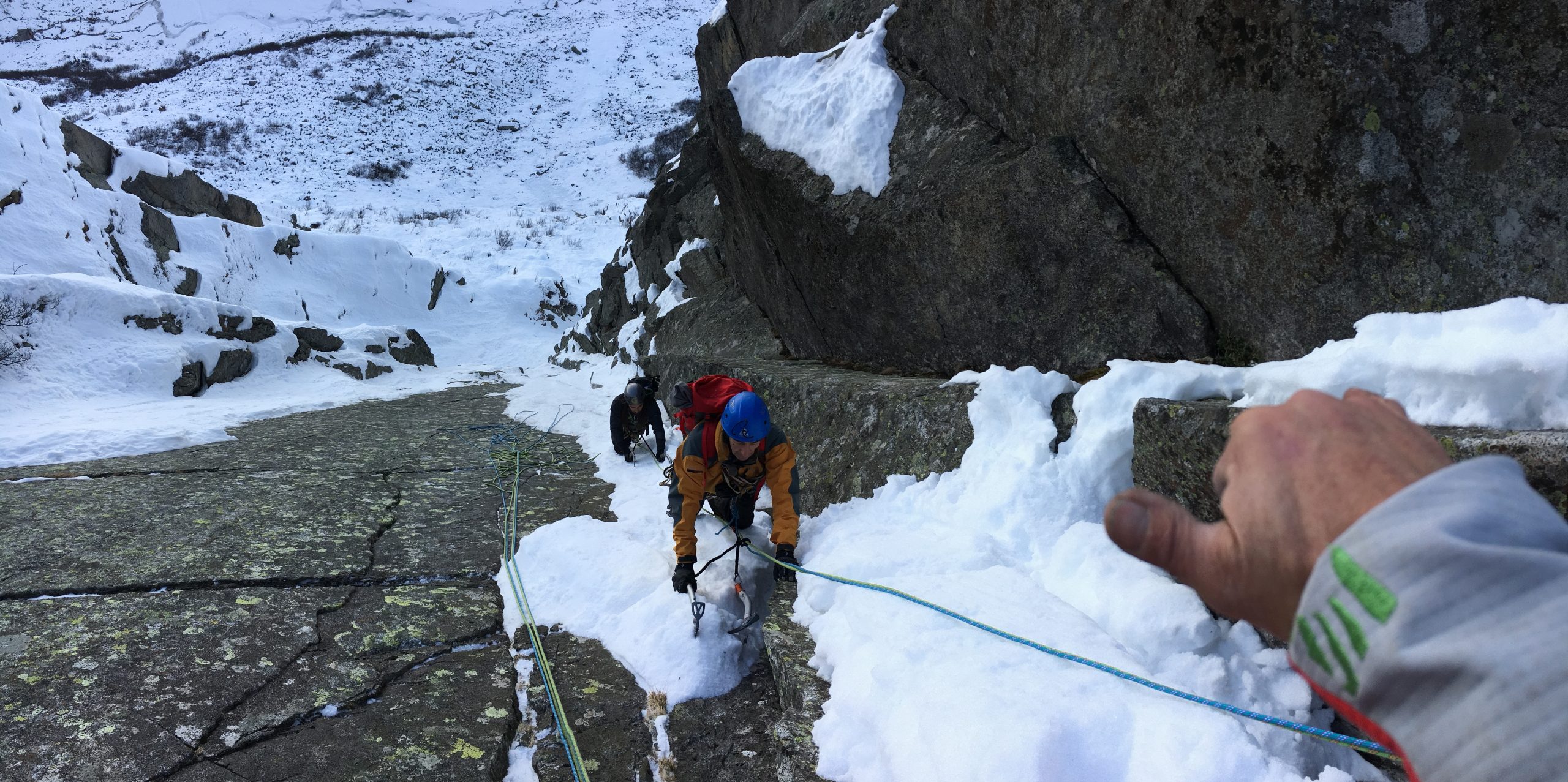
Day 2: Climbing and belaying on ice, rock, and snow.
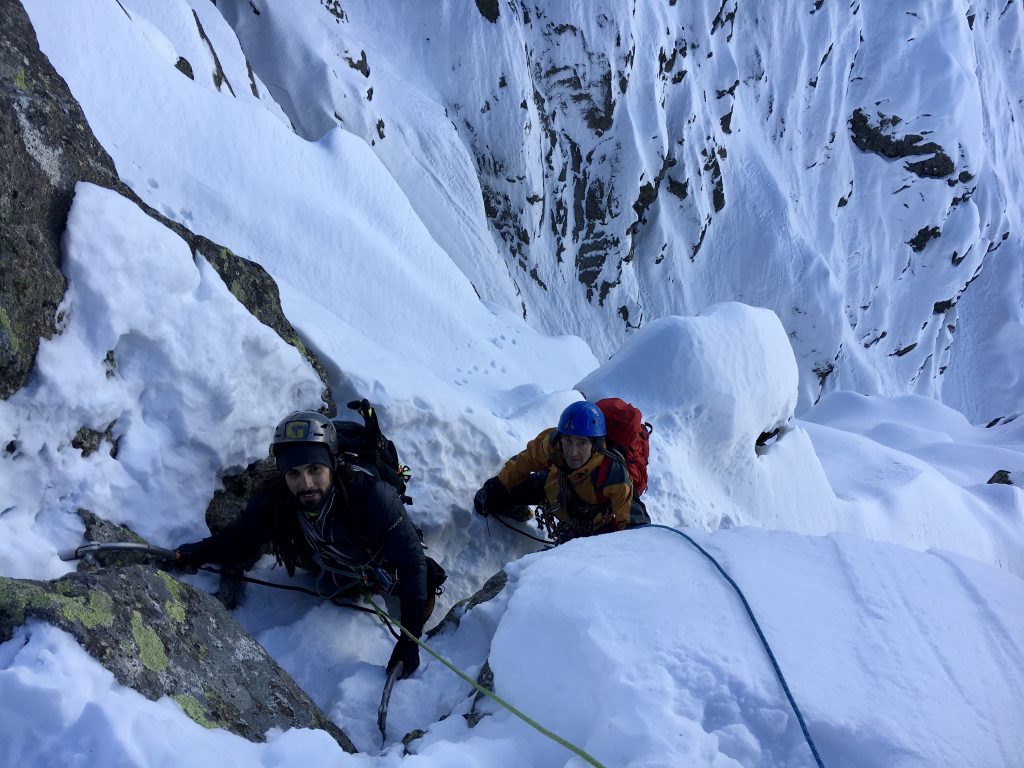
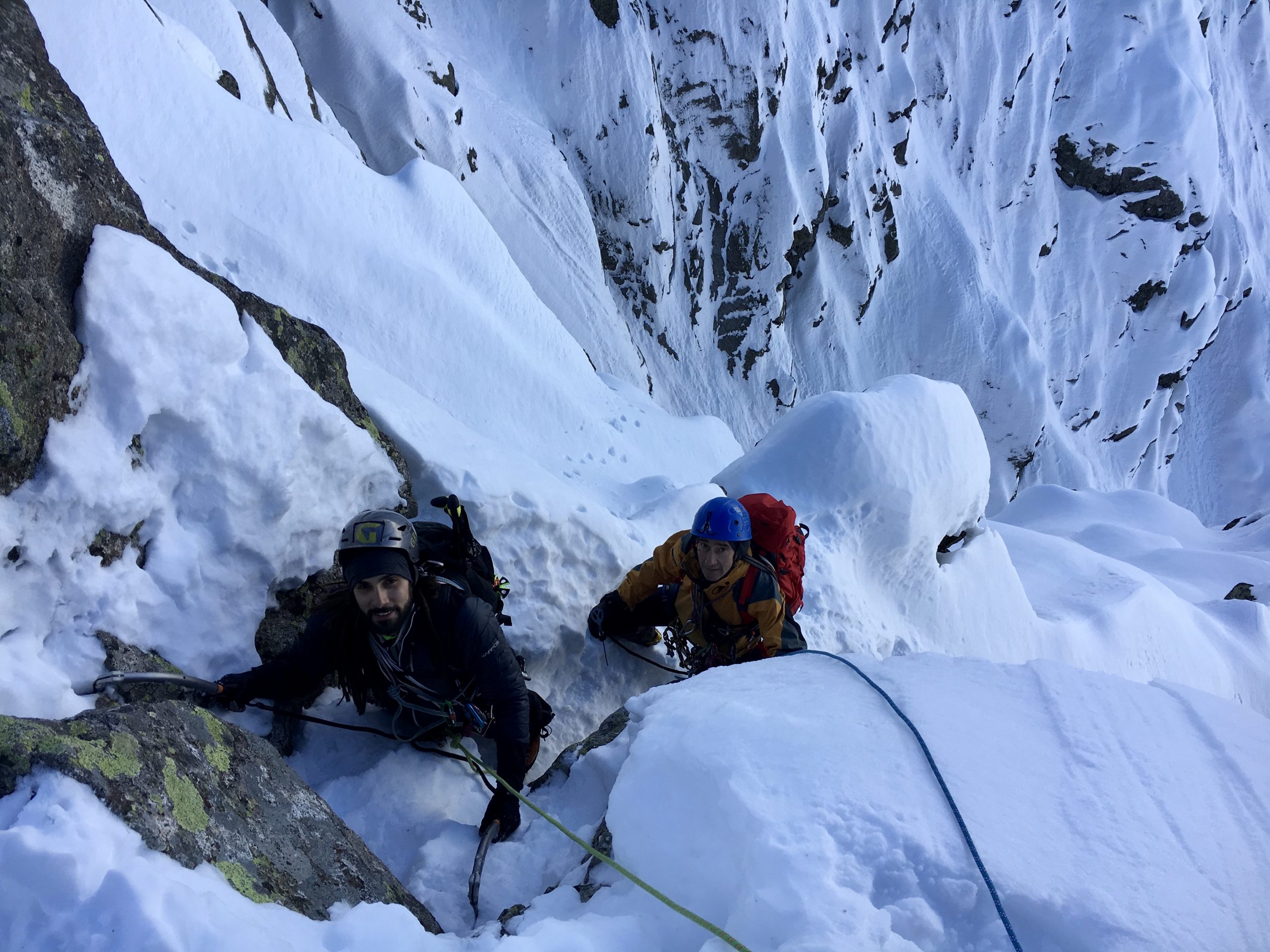
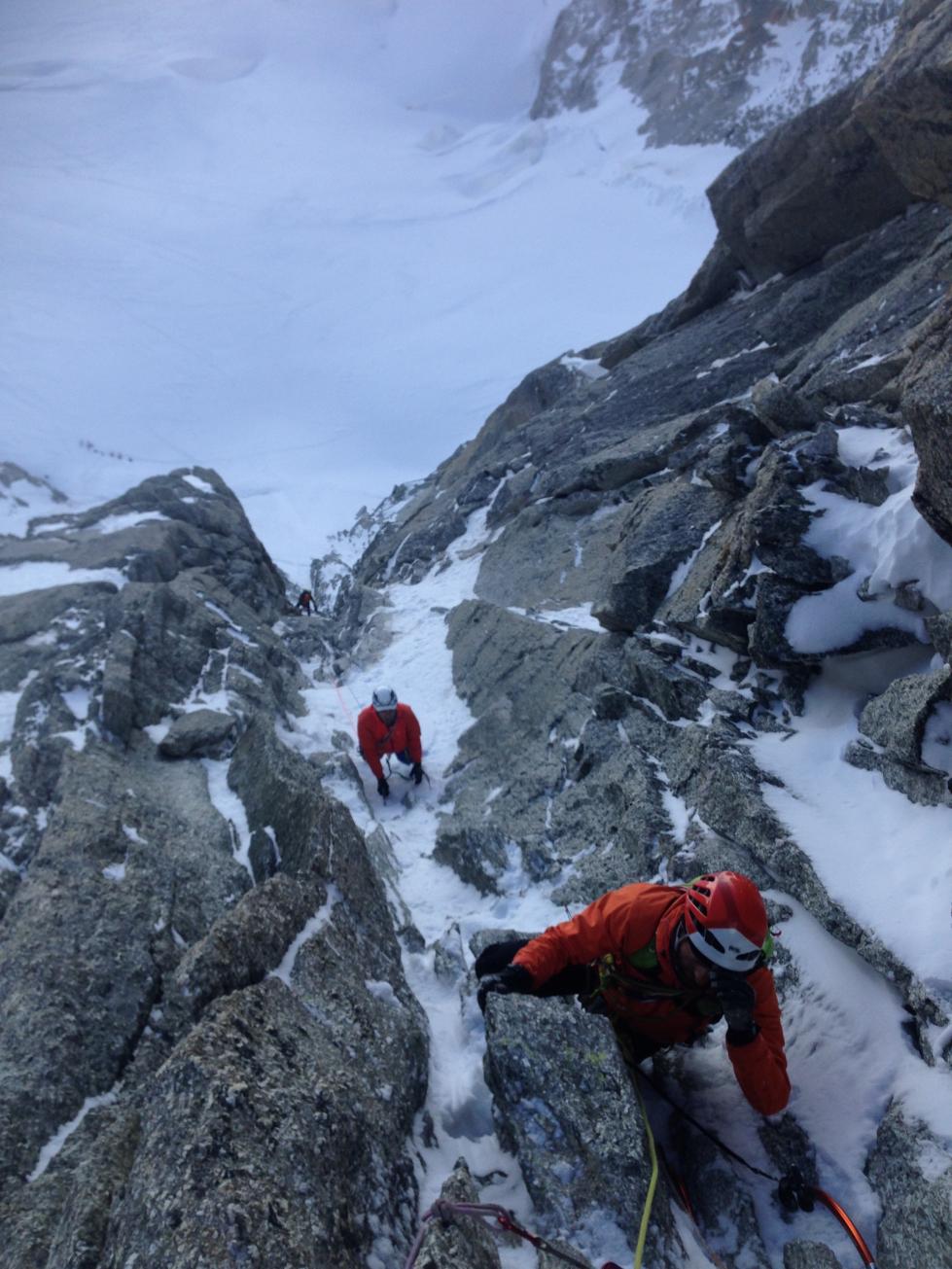
Days 3-4-5: High mountain ascents in couloirs and mixed terrain (rock and ice).
**Required Grade:** At least 6a in the gym and 5+ in the mountains.
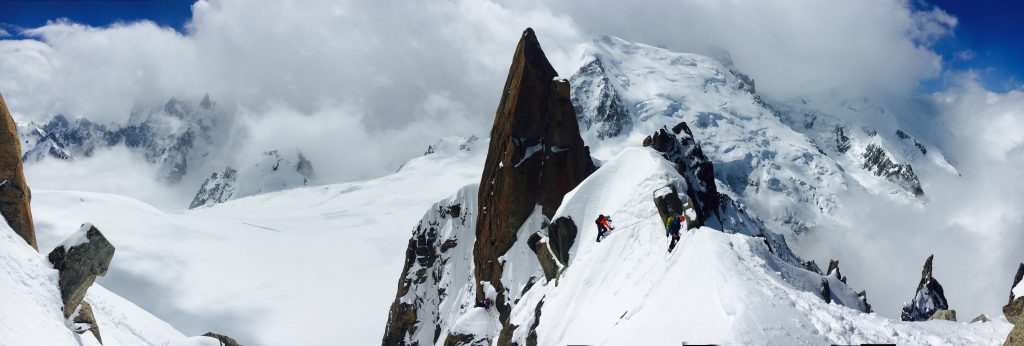
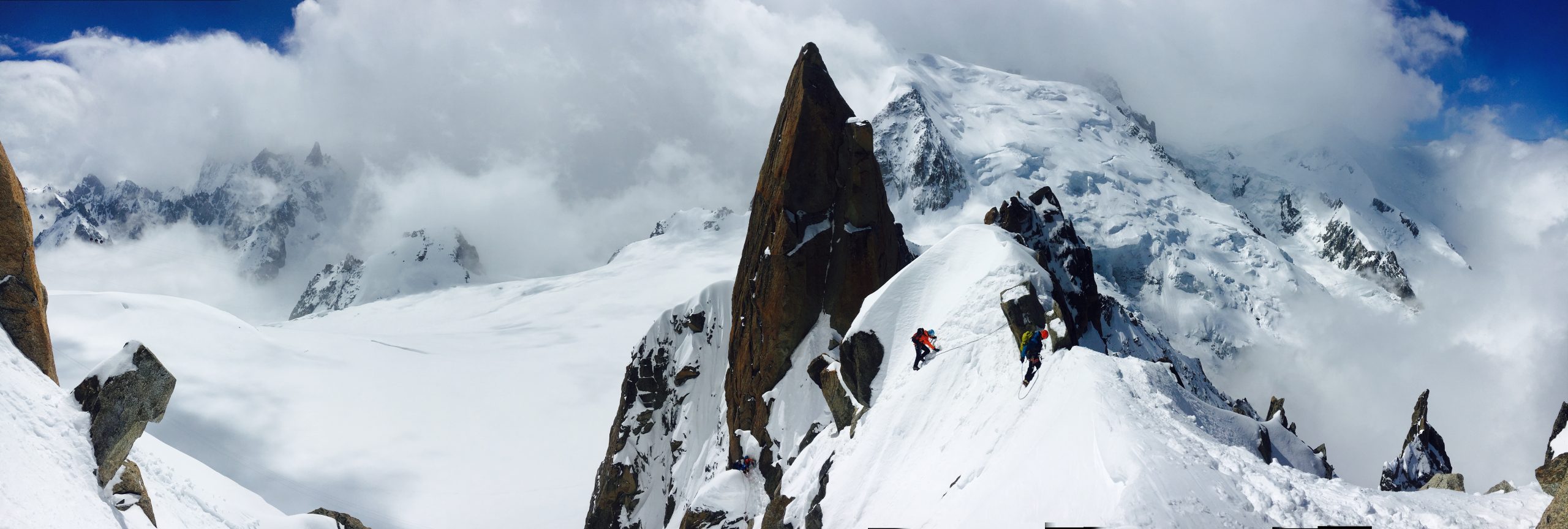
Alpine skis may be useful for approaches; groups will be formed based on the skills of those who ski and those using snowshoes (which are less comfortable for descents). Depending on environmental conditions, outings will take place in high mountain areas such as Adamello-Presanella or Mont Blanc.
**N.B.: Inform your guide in advance of any medical and/or physical conditions, allergies, or anything else that could negatively impact the activity and create danger for yourself, your companions, and the guide.**
Dettagli:
* Introduction and practice of dry tooling
* Progression techniques on rock and mixed terrain
* Crevasse rescue: self-rescue, hauling systems, and rope-team techniques
Day 2 – Ice Climbing and Self-Rescue Techniques
* Ice climbing on single-pitch routes
* Evening session on self-arrest with ice axes and crampons on a slope
* Anchors and belays on snow, ice, and rock
Day 3 – Multi-Pitch Ice Climbing
* Climbing a multi-pitch ice route
* Full application of the techniques learned in the previous days
* Rope-team management, safety, and progression
Base 19 21 december
Base 2-4 february
- Mt. Blanc
1 persona 1100€
2 persone 560€
3 persone 400€
4 persone 380€
6 persone 300€
Advance
1 persona 2000€
2 persone 1000€
4 persone 800€
6 persone 700€
Step 1 – Introduction and Preparation
Objectives: Understand risks, logistics, and essential equipment.
• Overview of the winter alpine environment
• Weather and snowpack analysis
• Physical and psychological preparation
• Personal and team equipment
• Layered clothing system
• Crampons, ice axe, helmet, harness
• Avalanche safety gear (transceiver, shovel, probe)
• Bivouac and emergency equipment
⸻
Step 2 – Snow and Ice Techniques
Objectives: Move safely on snow and ice terrain.
• Proper use of crampons (flat terrain, traversing, ascending, descending)
• Ice axe types and handling techniques
• Self-arrest technique (using the ice axe)
• Rope progression on snow and ice
• Use of natural and artificial anchors (snow pickets, ice screws, deadman anchors, etc.)
⸻
Step 3 – Mixed Terrain Progression and Safety
Objectives: Move safely on mixed rock–ice terrain with protection.
• Mixed climbing techniques (snow/ice/rock)
• Use of protection devices (friends, nuts, ice screws)
• Building safe belays and anchors
• Rope management: moving together, long pitches
• Ropework and maneuvers (belaying, hauling, rappelling, lowering)
⸻
Step 4 – Risk Management and Self-Rescue
Objectives: Respond to emergencies and prevent accidents.
• Analysis of objective and subjective hazards
• Avalanche risk assessment (3x3 method, avalanche bulletins, snowpack tests)
• Avalanche self-rescue techniques (transceiver, shovel, probe)
• Glacier rescue (crevasse fall, anchors, hauling systems)
• First aid for hypothermia and trauma
⸻
Step 5 – Planning an Ascent
Objectives: Apply all acquired skills in a real climb.
• Route selection and study of route descriptions
• Time estimation and weather window evaluation
• Group management and safety during progression
• Mountaineering ethics and minimal environmental impact
• Simulation of a multi-pitch climb or short winter expedition
⸻
Step 6 – Assessment and Autonomy
Objectives: Achieve independence on classic winter alpine routes.
• Final practical ascent or field test
• Technical and personal debriefing
• Error correction and individual evaluation
• Guidelines for continuous improvement (training, refreshers, technical updates)